
If you've been looking into professional skincare and keep landing on these two treatments, you're already ahead of most men. Microdermabrasion and chemical peels are two of the most effective options available for improving skin texture, clearing up post-acne damage, reducing dark spots, and generally making your face look sharper and healthier. But they work very differently, cost differently, and suit different concerns.
This guide breaks down everything a man needs to know before booking: how each treatment works, which one handles specific concerns better, what combination approaches look like, and what it all costs. No filler, no generic advice, no content written for women. This is the comparison built specifically for men.
How Microdermabrasion and Chemical Peels Work Differently on Men's Skin
Before comparing these two treatments side by side, it helps to understand what they're actually doing to your skin at a mechanical level, and why male skin biology matters here.
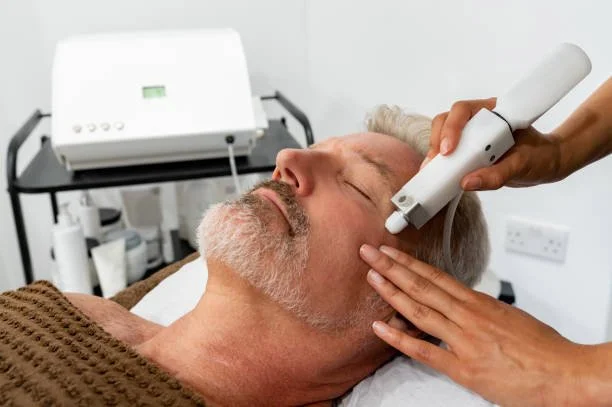
Microdermabrasion is physical exfoliation. A diamond-tipped wand or a fine crystal spray, combined with vacuum suction, removes dead cells from the outermost layer of skin, the stratum corneum. It resurfaces the epidermis through controlled abrasion, which then triggers your skin's natural repair process and stimulates collagen production.
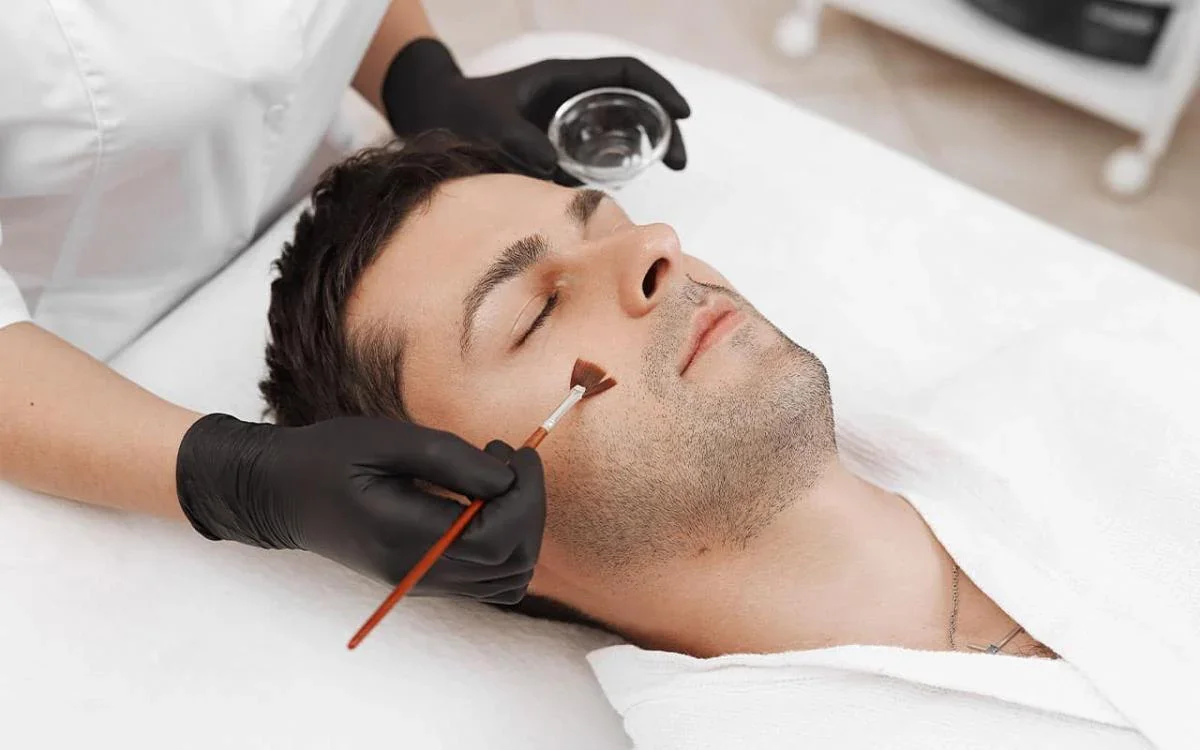
A chemical peel takes a different approach entirely. An acid-based solution, usually glycolic acid, salicylic acid, TCA, or in deeper cases phenol, is applied directly to the skin. The acid dissolves the bonds between dead skin cells and, depending on the concentration and type, penetrates into the deeper layers of the epidermis or even the dermis to resurface at varying depths.
Why does male skin change the equation? Men's skin is biologically thicker than women's, with a denser epidermis and greater collagen density. That means microdermabrasion can be performed more aggressively on male skin without triggering the sensitivity reactions that concern thinner-skinned clients. It also means that the same treatment often needs to work harder to produce the same level of correction.
Higher sebum production is another critical factor. Men's skin produces more oil than women's, which makes the skin more prone to clogged pores, congestion, and breakouts. Chemical peels that use salicylic acid, a BHA that penetrates oil-filled pores, are particularly well-suited for oily male skin.
Then there's shaving. Daily shaving creates micro-abrasions across a significant portion of the face. This affects how soon you can shave after each treatment and how your skin responds in the days following a session. Both procedures are compatible with an active grooming routine, but the timing considerations differ, and no generic comparison blog accounts for this.
Both treatments stimulate collagen production, just through different mechanisms. Microdermabrasion encourages it by physically removing the top layer and prompting regeneration. Chemical peels prompt collagen synthesis through controlled chemical injury at the treatment depth.
What Is Microdermabrasion
Microdermabrasion is a non-invasive mechanical exfoliation treatment that removes the outer layer of dead skin to reveal fresher, smoother skin underneath.
The two primary methods are diamond-tip and crystal. Diamond-tip microdermabrasion uses a wand embedded with fine diamond particles combined with suction to exfoliate and lift away dead skin simultaneously. Crystal microdermabrasion blasts the skin with fine aluminum oxide or sodium bicarbonate crystals and suctions them back along with the loosened skin cells. Both deliver comparable results, with diamond-tip being the more common method at professional salons.
A standard session runs 30 to 45 minutes, requires no anesthesia, and involves zero downtime. You can go back to your normal day immediately afterward. Results appear gradually, typically over a series of four to six sessions. Microdermabrasion is best suited for surface-level concerns: uneven texture, dullness, mildly enlarged pores, and shallow scarring.
What Is a Chemical Peel for Men
A chemical peel applies an acid solution to the skin to dissolve dead cells and stimulate renewal at a controlled depth. The treatment is categorized into three levels based on how deep the acid penetrates.
Light peels use alpha hydroxy acids (AHAs) such as glycolic acid or beta hydroxy acids (BHAs) such as salicylic acid to exfoliate the outermost layer of skin. They require little to no downtime and can be repeated every few weeks. Medium peels typically use TCA (trichloroacetic acid) to penetrate into the upper dermis, producing more dramatic results with a recovery period of several days to a week. Deep peels use phenol and penetrate significantly further, delivering the most dramatic correction but requiring weeks of recovery and careful medical supervision.
For most men seeking treatment for acne scars, oily skin, or early signs of aging, light to medium peels are the practical range. Treatment time varies by peel depth, from 15 to 30 minutes for a light peel to longer for medium-depth protocols.
Microdermabrasion vs Chemical Peel: Side-by-Side Comparison for Men
Here is how both treatments compare across the factors that matter most to men.
Treatment method: Microdermabrasion uses physical abrasion with a diamond-tipped wand and vacuum suction. A chemical peel uses an acid solution applied topically to dissolve and lift skin at the chosen depth.
Pain level: Microdermabrasion feels like mild scratching or a slightly rough dragging sensation across the skin. Most men find it completely tolerable and even relaxing. A light chemical peel produces tingling and mild heat. A medium or deep peel produces a more intense burning sensation that is managed with cooling or topical numbing.
Downtime: Microdermabrasion involves no downtime. You may have minor pinkness for a few hours, but nothing that interrupts your day. A light peel involves minimal flaking over one to three days. A medium peel involves active peeling and redness for five to seven days. A deep peel requires weeks of recovery.
Results timeline: Microdermabrasion delivers a noticeable improvement in texture and radiance after each session, but the cumulative results build across four to six treatments. A chemical peel, even a light one, often produces more visible correction per individual session.
Cost: Microdermabrasion is typically more affordable per session than medium or deep chemical peels. Pricing varies by location and provider. At Chicago Male Salon, microdermabrasion is available as a $50 facial add-on, making it one of the most accessible professional skin treatments available. Chemical peels vary more widely depending on peel depth and formulation.
Shaving compatibility: After microdermabrasion, most men can resume shaving within 24 hours. After a light peel, the general guidance is 24 to 48 hours. After a medium or deep peel, you need to wait until peeling has fully resolved before razor contact. For men who shave daily, microdermabrasion's faster recovery window is a practical advantage.
Skin tone suitability: Microdermabrasion is safe for all skin tones, including darker complexions, without the risk of post-inflammatory hyperpigmentation. Deeper chemical peels carry a hyperpigmentation risk for men with melanin-rich skin and require a more careful consultation.
Maintenance schedule: Microdermabrasion is typically done every two to four weeks during an initial series and monthly for maintenance. Light peels can be repeated every four to six weeks. Medium peels are usually spaced three to six months apart.
Which Treatment Is Better for Acne Scars, Wrinkles, and Dark Spots
The right treatment depends heavily on your specific skin concern. Here's how each one performs across the conditions men deal with most.
Acne Scars and Active Acne
Shallow acne scars, the surface-level texture irregularities left behind after breakouts resolve, respond well to microdermabrasion over a series of sessions. The treatment levels the skin's surface incrementally and improves overall texture.
Deeper pitted or boxcar scars require more penetration than microdermabrasion can deliver. A medium-depth TCA peel reaches further into the dermis, breaking down the structural irregularities that cause those deeper depressions and prompting more significant collagen remodeling.
Active acne is where chemical peels pull ahead. Salicylic acid peels penetrate oil-filled follicles, reduce bacterial load, and calm active breakouts from within. Microdermabrasion on actively inflamed skin can aggravate breakouts and irritate lesions rather than improving them.
For men with oily, acne-prone skin, which describes a significant portion of male clients, BHA-based peels work with the skin's biology. The combination of high sebum production and clogged pores is exactly what salicylic acid is designed to address. You can explore the men's chemical peel options at Chicago Male Salon to see what's available.
Fine Lines and Early Wrinkles
For mild fine lines, a series of microdermabrasion sessions gradually improves surface smoothness and supports ongoing collagen production. The results are subtle but cumulative.
For moderate wrinkles, a medium peel delivers more visible improvement per treatment because it reaches the dermal layer where structural collagen loss is actually occurring.
Men's thicker skin means wrinkles often set deeper and earlier than they appear on the surface. This structural depth can limit how much a surface treatment like microdermabrasion can accomplish for men with established wrinkle lines. A peel that penetrates more meaningfully into the dermis may deliver better results for men over 35 dealing with more than just fine surface lines.
Sun Damage, Dark Spots, and Uneven Skin Tone
Mild surface-level discoloration responds to microdermabrasion. Over a series of sessions, it can fade superficial pigmentation and even out minor tone irregularities.
Deeper hyperpigmentation, persistent sun spots, and years of accumulated UV damage require more than surface exfoliation can deliver. Glycolic acid and TCA peels penetrate to where this pigmentation is actually embedded in the skin, breaking it up more aggressively and accelerating cellular turnover.
Men who spend significant time outdoors, work outside, or have historically skipped sunscreen tend to accumulate more UV damage than the average client. For these men, a chemical peel is typically the more effective first step toward meaningful correction.
One important caution: men with darker skin tones should be thoughtful about peel depth. Deeper peels carry a real risk of post-inflammatory hyperpigmentation in melanin-rich skin. Light peels with carefully selected acids or microdermabrasion are typically the safer and smarter starting point.
How Men at Chicago Male Salon Choose Between Microdermabrasion and Chemical Peels
The choice isn't always obvious from research alone. In practice, it comes down to what a man's skin actually looks like, what concerns bother him most, and how much interruption to his routine he's willing to tolerate.
A common client scenario at Chicago Male Salon is the guy who's been dealing with post-acne texture for years, the roughness and uneven tone that sticks around long after breakouts stop. For him, a series of microdermabrasion facials often delivers the surface improvement he's been looking for, using a diamond-tipped wand in a procedure that fits into a lunch break with no recovery required.
A different scenario is the man who's accumulated years of sun damage, maybe worked outdoors, maybe just never wore sunscreen consistently, and now has persistent dark spots and a dull complexion that moisturizer alone can't fix. For him, a chemical peel offers more targeted, per-session correction than surface exfoliation can provide.
Microdermabrasion at Chicago Male Salon is available as a $50 facial add-on, which makes it practical as both a first treatment and an ongoing maintenance protocol. Chemical peels are available for men whose skin concerns require deeper correction.
Many clients start with microdermabrasion as the lower-risk entry point. As their skin improves and their comfort with professional skincare grows, they layer in peels for specific corrections. It's a natural progression rather than an either-or decision.
One factor that matters more than most men realize before their first visit: the men-only environment removes the awkwardness that keeps a lot of guys from trying professional skincare in the first place. These treatments are framed as grooming, not spa services, which changes how the experience feels for most clients. The staff assesses each client's skin during the consultation and recommends the right treatment path based on what the skin actually needs, not on maximizing service volume.
Can You Combine Microdermabrasion and Chemical Peels
Yes, and for many men, the combination approach delivers better long-term results than either treatment alone.
The two treatments target different depths and work through different mechanisms, which means they can complement each other strategically when spaced correctly. Microdermabrasion before a chemical peel prepares the skin by removing the uppermost layer of dead cells, which allows the acid solution to penetrate more evenly and effectively. Some providers use this sequencing specifically to improve peel outcomes.
A more common long-term approach is alternating treatments across a series. Microdermabrasion handles ongoing surface maintenance, keeping texture smooth and pores clear between appointments. Chemical peels are used periodically for deeper correction, targeting pigmentation, scarring, or signs of aging that surface exfoliation can't fully address.
The timing rule is straightforward: never combine both treatments in the same session, and allow one to two weeks between different treatment types to give skin time to stabilize and heal. Running both treatments too close together increases irritation risk without proportional benefit.
For men, this combination approach works particularly well because the two treatments address the two most common male skin concerns simultaneously. Microdermabrasion handles the surface-level effects of daily shaving, dullness, and minor congestion. Chemical peels address the deeper structural concerns, including post-acne scarring and UV damage, that build up over years. Together, they cover more ground than either treatment handles alone.
Chicago Male Salon builds combination treatment plans during the consultation for clients who want a longer-term skincare strategy rather than a single-session fix.
What About Microneedling: How Does It Compare
If you've been researching facial treatments for men, microneedling has probably come up. It's worth addressing briefly here so you don't need to run a separate search.
Microneedling, also called collagen induction therapy, uses a derma pen or roller device with fine needles to create controlled micro-injuries in the skin. Those micro-injuries trigger the body's wound-healing response and stimulate deep collagen production and elastin remodeling. It goes deeper than either microdermabrasion or light-to-medium chemical peels.
Microneedling is more invasive than microdermabrasion, with downtime that's generally comparable to a medium peel. Redness and sensitivity typically resolve over two to five days. It can be combined with PRP, platelet-rich plasma derived from your own blood, for enhanced collagen stimulation. That protocol, often called PRP microneedling, has become popular for deeper skin tightening and scar remodeling.
Microneedling is best suited for deeper acne scarring, significant skin tightening, collagen loss associated with aging, and stretch marks. It's not a replacement for microdermabrasion or chemical peels but rather a different depth of treatment that serves a different purpose.
A practical framework for choosing: use microdermabrasion for surface refresh and ongoing maintenance, use a chemical peel for moderate correction of pigmentation and acne marks, and consider microneedling when the concern involves deeper structural improvement or significant collagen loss.
Cost Comparison: Microdermabrasion vs Chemical Peel Pricing for Men
Cost is one of the most practical factors in choosing between these treatments, particularly if you're planning a multi-session commitment rather than a one-time experiment.
Microdermabrasion: The national average runs approximately $100 to $200 per session at most spas and skincare clinics. At Chicago Male Salon, microdermabrasion is available as a $50 facial add-on, which is significantly below the market average and makes regular maintenance realistic without a major ongoing expense.
Chemical peels: Pricing varies considerably by peel depth. Light peels typically range from $100 to $300 per session. Medium-depth TCA peels run $200 to $600 depending on the provider and the formulation. Deep phenol peels are $500 and above, and they're typically only performed in medical settings.
Insurance: Neither treatment is covered by insurance. Both are classified as cosmetic procedures regardless of whether they're being used to address acne or post-inflammatory hyperpigmentation.
The per-session comparison only tells part of the story. Series cost is the more accurate way to evaluate the investment. Microdermabrasion typically requires four to six sessions to deliver cumulative improvement for concerns like texture and mild scarring. A chemical peel series for similar concerns might run two to three sessions but at a higher per-session cost. Over a full treatment series, the total expenditure often lands in a comparable range, though microdermabrasion carries the lower individual session commitment.
For men committing to regular ongoing treatment, the Chicago Male Salon membership can reduce the cost of maintaining a consistent schedule. The ROI difference between the two treatments comes down to what you're optimizing for: microdermabrasion is the better choice for affordable, no-downtime maintenance, while chemical peels deliver more targeted correction per session for men who want meaningful improvement with fewer appointments.
Frequently Asked Questions
Is microdermabrasion or a chemical peel better for men?
Neither treatment is universally better. The right choice depends on your primary skin concern, how much downtime you're willing to accept, and your budget for a treatment series.
Microdermabrasion is the stronger choice for men dealing with surface texture irregularities, enlarged pores, dullness, and mild scarring. It's also the better option for men who shave daily and need a treatment with zero post-procedure disruption to their grooming routine.
Chemical peels are the stronger choice for men dealing with deeper pigmentation, moderate acne scarring, wrinkles, or years of sun damage. They produce more correction per session at the cost of a short recovery period.
Many men benefit most from using both strategically across a longer-term skincare plan rather than committing exclusively to one or the other.
Can I shave after microdermabrasion or a chemical peel?
After microdermabrasion, you should wait 24 hours before shaving the treated area. The skin's outer layer has been freshly exfoliated and needs a brief recovery window before razor contact.
After a light chemical peel, the general guidance is 24 to 48 hours before shaving, depending on how your skin responds and the specific formulation used.
After a medium or deep peel, you need to wait until active peeling has fully resolved before shaving. Depending on the peel depth, that can range from several days to a couple of weeks. Running a razor over actively peeling or healing skin significantly increases the risk of irritation, scarring, and infection.
Regardless of which treatment you've had, use a clean, sharp razor and avoid alcohol-based aftershave products on freshly treated skin. Fragrance-free, non-irritating post-shave products are strongly recommended during the recovery period.
Which treatment is better for acne scars on men's skin?
The answer depends on how deep the scarring runs. Shallow surface-level scars, the kind that show up as minor texture irregularities rather than true depressions, respond well to microdermabrasion over a series of sessions. The treatment gradually smooths the surface and improves overall skin quality.
Deeper pitted or boxcar scars require more penetration than microdermabrasion can deliver. A medium-depth chemical peel using TCA reaches further into the dermis, addressing the structural irregularities that cause those sunken depressions and stimulating the collagen remodeling needed to fill them in over time.
Men with oily, acne-prone skin often respond particularly well to salicylic acid peels, which combine surface exfoliation with active oil and bacteria control. If you're dealing with both active acne and post-acne scarring, a BHA-based peel may address both concerns in a single treatment protocol.
A professional assessment of scar depth is the most reliable way to determine which approach is appropriate for your specific situation.
What is the best facial treatment for men who have never tried professional skincare?
Microdermabrasion is the most common and recommended starting point for men who are new to professional skincare. It's non-invasive, carries no downtime risk, doesn't require any complicated aftercare protocol, and delivers visible results after the first session.
The low pain threshold, the quick 30 to 45 minute treatment time, and the ability to go straight back to your normal day make it ideal for first-timers who want to see what professional skin treatment can do without committing to a recovery period.
Once a man has gone through a series of microdermabrasion sessions and has a better sense of how his skin responds to professional treatment, exploring chemical peels for more targeted concerns becomes a natural next step.
At Chicago Male Salon, the consultation process evaluates each client's skin individually and recommends the right entry point based on actual condition rather than a standard new-client protocol.
How often should men get microdermabrasion or chemical peels?
For microdermabrasion, the standard protocol is every two to four weeks during an initial treatment series of four to six sessions. Once the skin has been brought up to baseline improvement, monthly maintenance keeps the results consistent without over-exfoliating.
Light chemical peels can be repeated every four to six weeks, making them compatible with a regular skincare schedule.
Medium-depth peels are typically spaced three to six months apart. Because they penetrate deeper and require a recovery period, they're used for periodic intensive correction rather than frequent maintenance.
For men combining both treatments, a staggered schedule works best. Your provider maps out the timing based on how your skin responds to each treatment and what concerns you're prioritizing across the series. The goal is to keep skin actively improving without stressing it through over-treatment.