
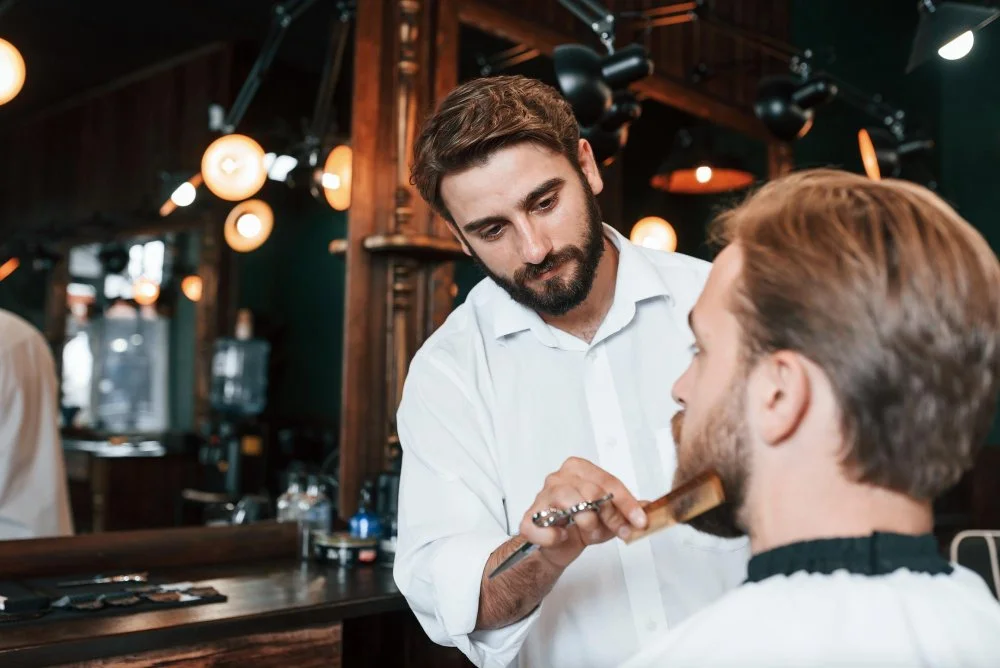
Walking out of the barbershop unhappy with your haircut is frustrating—and more common than it should be. The good news? Most bad haircuts don’t happen because the barber lacks skill. They happen because of miscommunication. Knowing how to communicate with your barber (and how to ask for a haircut at a barber shop) is the single biggest factor in getting results you actually like.
This guide breaks down exactly how to ask the barber for a haircut, even if you don’t know the terminology, don’t have a specific style name, or feel awkward speaking up. Whether you’re visiting a barber for the first time in Chicago or building a long-term relationship, this article will help you walk in confident—and walk out sharp.
Why Clear Communication Is the Key to Your Perfect Haircut
Ask any barber, and they’ll tell you the same thing: most haircut dissatisfaction comes from unclear expectations, not poor execution. Men’s grooming authorities such as Real Men Real Style, The Art of Manliness, and Dear Barber consistently highlight communication as the root cause of bad haircut experiences.
Barbers aren’t mind readers. When a client says “just a trim” or “short on the sides,” that can mean ten different things depending on the person. One client’s “short” is another client’s nightmare. That gap between what you mean and what your barber hears is where things go wrong.
Communication breakdowns almost always happen before the first clipper turns on. Vague language, missing details, or assumptions about shared understanding lead to mismatched expectations. On the flip side, being specific—even if you’re not fluent in barber terminology—dramatically improves outcomes.
This guide exists to bridge that gap. You don’t need to be an expert or memorize every haircut term. You just need the right tools, language, and mindset to clearly explain what you want—and collaborate with your barber to make it work.
Do Your Research Before Your Appointment
Great barber communication starts before you sit in the chair. Doing a little prep work helps you articulate what you want and avoids in-the-moment confusion.
Start by browsing inspiration. Look at barber shop websites, Instagram pages, and grooming brands like Hudson/Hawk, Dear Barber, and Real Men Real Style. Save styles that genuinely appeal to you—but don’t stop there.
Pay attention to face shape and hair type. A celebrity haircut might look incredible on them, but fall flat on you if your hair texture, density, or growth pattern is different. Straight vs. wavy, thick vs. fine, and cowlick placement all matter more than most people realize.
Ask yourself:
How long has it been since your last haircut?
What did you like about previous cuts?
What didn’t work?
Does your hair grow fast on the sides or unevenly in the back?
Lifestyle matters too. Are you a wash-and-go guy, or do you style daily with product? How much time are you realistically willing to spend on your hair each morning? A high-maintenance cut looks great—for about three days—if it doesn’t match your routine.
Knowing these answers makes it much easier to explain what you want when your barber asks, “So, what are we doing today?”
Learn the Language: Essential Barber Terminology
You don’t need to speak fluent barber—but understanding the basics makes communication clearer and faster. Shops like Joe’s Barber Shop Chicago, Hudson/Hawk, Salt City Barber, and Dear Barber all emphasize that shared terminology eliminates guesswork.
Here are the essentials:
Clipper guard numbers (0–8): These correspond to hair length in eighths of an inch
Fade: A tight gradient that blends from skin or very short hair into longer hair
Taper: A softer, more gradual transition—usually at the neckline and sideburns
Low / Mid / High fade: Where the fade starts on the head
Neckline: Can be tapered, squared, or rounded
Sideburn length: Top of ear, mid-ear, or bottom of ear
Texturizing: Removing bulk for movement, often done with scissors
Hard part: A shaved-in part line
Line-up / Edge-up: Cleaning the natural hairline around the forehead and temples
Why Clipper Numbers Matter More Than “Short” or “Long”
Words like “short” and “long” are completely subjective. Clipper numbers aren’t.
For example:
#2 guard ≈ ¼ inch
#4 guard ≈ ½ inch
Asking, “Can you do a #2 on the sides and back?” immediately removes ambiguity. Even if you’re unsure, your barber can explain and adjust. Using numbers shows clarity—and saves both of you from guesswork.
Show, Don’t Just Tell: Using Visual References Effectively
If you don’t know the names of haircuts, photos are your best friend. Brands and shops like Hudson/Hawk, Gifted Barbers, Adam Grooming Atelier, and Dear Barber all agree: visuals eliminate confusion.
Bring 2–3 reference photos, not just one. Make sure the models have similar hair types and face shapes. Then—this part is key—point out what you like.
Say things like:
“I like the length on top here.”
“I want the sides tighter like this.”
“I like how the neckline is cleaned up.”
Avoid expecting an exact replica. Your barber will help adapt the style to your hair and head shape. Also, avoid showing conflicting styles—pick your top one or two.
Pro tip: when you get a haircut you love, take photos from multiple angles. Future you will thank you.
Be Specific About Length and Details
One of the biggest mistakes men make is being vague. To avoid it, break the haircut into zones:
Top: Inches or fingers worth of length
Sides: Clipper number or fade type
Back: Fade or taper? How tight?
Sideburns: Exact stopping point
Neckline: Tapered, squared, or natural
Instead of saying “just a trim,” try:
“Half an inch off the top”
“Low fade on the sides, not too high.”
“Keep enough length to style with matte clay.”
You can even ask your barber to repeat the plan before you start. That quick recap prevents 90% of haircut regrets.
Discuss Your Lifestyle and Hair Care Routine
Your haircut should work with your life, not against it. Be honest.
Tell your barber:
How often do you style your hair
What products do you use (pomade, clay, gel)
Whether you blow-dry or air-dry
How often do you plan to come back for cuts
Your work environment (corporate, creative, athletic)
Shops like Adam Grooming Atelier, Cremo Company, and Hudson/Hawk emphasize that lifestyle alignment is just as important as aesthetics. A low-maintenance cut done right beats a high-maintenance cut you can’t keep up with.
Ask Questions and Stay Open to Suggestions
Your barber cuts hair all day, every day. That experience is valuable—use it.
Ask questions like:
“Would this work with my hair type?”
“What would you recommend for my face shape?”
“Is there a lower-maintenance version of this?”
Being open doesn’t mean giving up control. It means collaborating. A good barber will explain why they suggest changes—and you always have the final say.
Speak Up During the Cut (Real-Time Feedback)
If something feels off, say it—politely and immediately.
Examples:
“Can we leave a little more on top?”
“Let’s not go higher with the fade.”
“Can we check the back real quick?”
Good barbers appreciate feedback. Adjustments are easy with a mid-cut, and much harder afterward. Silence isn’t professionalism—communication is.
Building a Long-Term Relationship with Your Barber
Once you find a barber you trust, stick with them. Consistency leads to better results.
Your barber learns:
How your hair grows
What you like and dislike
How often do you maintain your cut
Regular visits (every 3–4 weeks) help maintain the style and the relationship. At Chicago Male Salon, long-term clients get faster consultations, better personalization, and more confident recommendations.
Common Communication Mistakes to Avoid
Avoid these common pitfalls:
Saying “just a trim” with no details
Contradicting yourself (“short but not too short”)
Assuming haircut names are universal
Showing one photo and expecting an exact match
Not speaking up during the cut
Ignoring maintenance and lifestyle factors
Awareness alone puts you ahead of most clients.
How This Applies to Our Clients at Chicago Male Salon

At Chicago Male Salon, this exact consultation approach is how we work with every client. Clear communication is baked into our process—especially for first-time visits. Our barbers ask detailed questions, encourage photos, and explain options without judgment. Whether you’re after a clean professional look or something more modern, we make sure expectations are aligned before we start cutting.
Many clients want versatile styles that work in both professional and casual settings—think clean fades, controlled top length, and sharp lines without looking overdone. When communication is clear, results are consistent. We also offer consultations so you can talk through your style goals with zero pressure. Our goal is simple: you leave confident, comfortable, and happy with your haircut—every time.
Conclusion:
Great haircuts aren’t about luck—they’re about communication. When you know how to explain what you want, use clear language, bring visual references, and stay open to collaboration, you dramatically increase your chances of leaving the barbershop feeling confident and satisfied. You don’t need to know every barber term or have a perfect vision going in. What matters is preparation, honesty about your lifestyle, and the confidence to speak up before and during the cut.
At the end of the day, your barber wants the same thing you do: a result you’re proud to wear. When communication is clear, haircuts stop feeling like a gamble and start feeling consistent. If you’re in Chicago and ready for a haircut that actually matches your expectations, our team is here to guide you through the process—from consultation to final detail—so you walk out sharp every single time.
Frequently Asked Questions
What should I do if my barber gives me a haircut I don’t like?
If you’re unhappy with your haircut, the first step is to give it a few days and style it yourself the way you normally would. Haircuts can look very different after washing, drying, and styling at home. If it still doesn’t feel right, calmly and clearly explain to your barber what feels off—whether it’s the length, the fade height, the balance, or how it grows out. Most professional barbers genuinely want you to be happy and are often willing to make adjustments at no charge. If communication continues to be an issue or you feel dismissed, it’s okay to find a new barber. A good barber-client relationship depends on mutual respect and clear communication.
How do I ask for a specific haircut by name if I don’t know the name?
If you don’t know the name of a haircut, don’t guess—haircut names vary widely by region, shop, and barber. Instead, bring 2–3 clear reference photos and describe what you like about them. Point out details such as the length on top, how tight the sides are, whether the hair is layered, and how it’s styled. You can also ask your barber what they would call the style in their shop, which helps build shared language for future visits. Barbers are used to this and won’t judge you for not knowing terminology. Saying “I want it like this photo, especially the sides and movement on top” is far clearer than guessing a name and hoping it translates correctly.
What’s the difference between a taper and a fade?
A taper and a fade both involve shortening hair toward the neckline and sides, but the effect is very different. A taper is subtle and gradual, blending longer hair into shorter hair without exposing skin. It creates a softer, more natural look and grows out cleanly, making it lower maintenance. A fade, on the other hand, is tighter and more dramatic. It blends into very short hair or skin, creating a sharp contrast. Fades look extremely clean but require more frequent upkeep, usually every 2–3 weeks. If you want a versatile, professional look that lasts longer between cuts, ask for a taper. If you want a bold, crisp style, a fade may be the better choice.
How often should I get a haircut?
How often you should get a haircut depends on your style, length, and how polished you want to look. For most men with short to medium-length hair, getting a cut every 3–4 weeks helps keep the cut looking fresh and intentional. If you wear a fade, you’ll likely need a haircut every 2–3 weeks, since fades grow out quickly and lose their sharpness. Longer hairstyles, including medium-length or flow-style cuts, can often stretch to 4–6 weeks between visits, especially with maintenance trims instead of full cuts. Your barber can recommend the ideal schedule based on how fast your hair grows and how you style it. Regular maintenance prevents awkward grow-out phases and keeps your haircut working for you.
Should I bring photos or ask my barber to suggest a style?
The best approach is to do both. Bringing photos gives your barber a clear visual starting point and helps eliminate miscommunication. At the same time, asking your barber for suggestions helps them tailor the style to your face shape, hair type, and lifestyle. A collaborative conversation almost always leads to better results than relying on photos alone or handing over total control. Barbers appreciate clients who arrive prepared but remain open to professional input. You might say, “I like this style, but do you think it works for my hair?” That balance of direction and trust allows your barber to fine-tune the cut so it looks great not just in the chair, but in real life.
Knowing how to communicate with your barber changes everything. With the right preparation, language, and confidence, you’ll stop gambling on haircuts—and start getting exactly what you want. If you’re in Chicago, we’d love to help you put this into practice.