
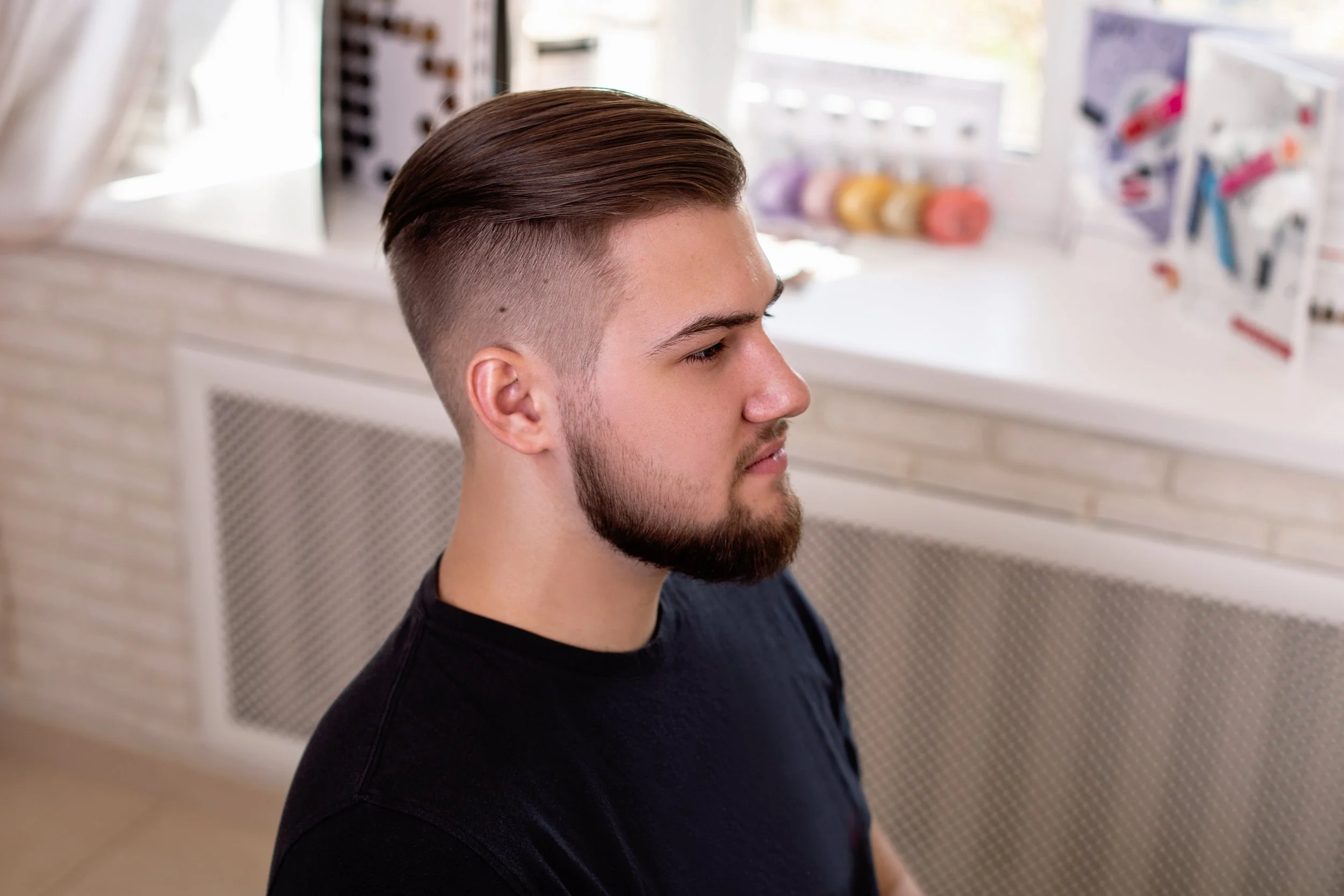
If you've ever sat down and said "just a fade" only to walk out with something that didn't look right, you already understand the problem this guide solves. There are seven distinct types of fade haircuts for men, each suited to your face shape, hair texture, and lifestyle. Here's everything you need to know before you book.
What a Fade Haircut Actually Is (And How It Differs from a Taper)
A fade is a clipper technique that blends hair from a longer length on top down to bare skin or very close-cropped sides and back, with no visible line between lengths. The seamless gradient is achieved by moving through progressively smaller guard sizes until the hair disappears into the skin. A taper does the same thing conceptually but stops short of the skin, leaving some hair at the neckline and sideburns. Both are blended cuts, but a fade produces a higher-contrast finish. Knowing which you want changes what you ask for at the chair.
Low Fade — The Most Versatile Cut in 2026
The low fade starts just above the ear and blends upward from there, keeping significant coverage on the sides. That coverage is what makes it the most requested fade in 2026 across diverse client types. It reads polished in professional environments, pairs naturally with a comb-over, textured crop, or medium-length styles on top, and requires less frequent maintenance than mid or high fades. For first-time fade clients, it's the right starting point — enough contrast to look intentional without committing to anything dramatic.
Mid Fade — The Balance Point Between Sharp and Subtle
The mid fade starts at the temple, sitting exactly between the ear and the crown. It produces more contrast than a low fade without crossing into the boldness of a high fade — which makes it the most commonly recommended starting point for clients moving from a taper to a fade for the first time. It works with a pompadour, quiff, textured top, or slick-back, and is particularly flattering on round or oval face shapes. When a client wants something modern but not extreme, mid fade is almost always the answer.
High Fade — Maximum Contrast, Maximum Commitment
The high fade begins near the crown, creating the sharpest contrast available between the sides and the top. It pairs best with bold styles — high-texture pompadours, quiffs, mohawks — and is most flattering on square or oval face shapes where strong angular structure can carry the severity. What no one mentions upfront: a high fade is the most unforgiving cut to let grow out. It needs a touch-up every one to two weeks to stay sharp. It makes a strong first impression, but it demands consistent maintenance to keep making it.
Skin Fade — The Cleanest Look, The Most Maintenance
A skin fade takes the hair all the way down to bare skin at the taper line — clippers pass directly over the scalp, leaving nothing behind. This is distinct from a zero fade, which uses clippers without a guard but leaves a faint, close layer of stubble. The skin fade is the most dramatic contrast cut available and requires a touch-up every one to two weeks. Because the scalp becomes exposed at the fade line, moisturizing and applying sunscreen to those areas matters — real barbers address this with clients who are committing to the look for the first time.
Drop Fade and Burst Fade — The Shape-Shifting Options
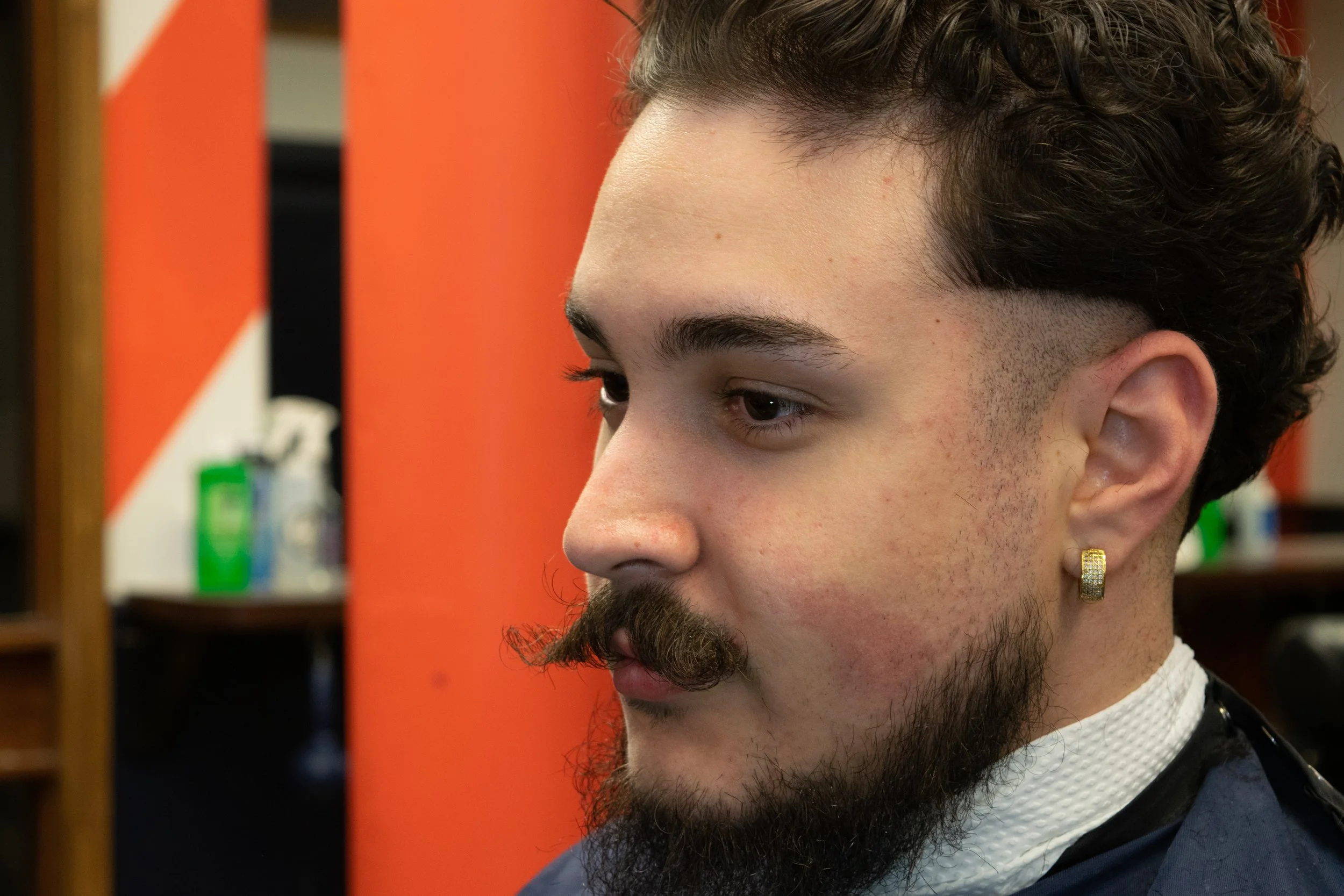
These two move beyond standard height categories and into shape. A drop fade curves down behind the ear rather than running straight across, creating a longer, more contoured silhouette that reads differently than a flat horizontal line. A burst fade circles around the ear and extends into the neckline, producing a rounded, radial effect that pairs naturally with mohawks and faux hawks. Both are more expressive than standard fades and work best with medium-to-longer top lengths, where the shape contrast is visible enough to read clearly on the finished cut.
Temple Fade and Shadow Fade — For Men Who Want Subtle Impact
A temple fade focuses only on the temples and sideburns, cleaning up the perimeter without extending a dramatic blend further up or down the sides. It's the most minimal fade option. A shadow fade keeps a thin, close layer of stubble rather than blending to skin, which extends the maintenance interval to three to four weeks without sacrificing clean lines. Both are ideal for professional environments, conservative style preferences, or men who want sharp edges without committing to high contrast. For clients with sensitive scalps, the shadow fade avoids the friction of regular close skin contact.
How to Choose a Fade Based on Your Face Shape
Face shape is the starting point, not the whole answer. Oval faces are the most flexible — high or mid fades work well, and most top styles complement them. Round faces benefit from a high or mid fade with added volume on top, which creates vertical contrast that visually lengthens the face. Square faces read best with a low or mid fade using softer curved edges that soften the jawline. Heart-shaped faces benefit from a low fade with volume at the sides to balance a wider forehead. Diamond faces gain width at the temples with a mid fade and a defined top. A stylist can confirm this in person, where actual structure and density are visible.
Fade Haircut Maintenance — How Often to Go Back and What It Really Costs
Low and shadow fades can stretch three to four weeks before they look overgrown. Mid fades hold their shape for two to three weeks. High and skin fades require a visit every 1 to 2 weeks to stay intentional rather than just grown out. At two cuts per month, the annual cost adds up — and that's before factoring in product for the top, scalp moisturizer for skin fades, and the time investment per visit. Building a consistent rhythm with the same stylist pays back in cut quality and efficiency: your stylist already knows your growth pattern, your cowlick, and exactly how you wear your fade.
What to Tell Your Barber or Stylist When Booking a Fade
Specificity is everything. Always name the height — low, mid, or high — rather than just saying "fade." Bring one to three reference photos from different angles, not just a front-facing shot. Tell your stylist how much length you want to keep on top and how often you realistically plan to come back, since that directly affects which fade height makes sense for you. Mention your hair texture, any concerns about thinning or cowlicks, and sensitive areas if you're considering a skin fade. State what you don't want as clearly as what you do. A good stylist will adapt the reference to what actually works on your head.
How Chicago Male Salon Matches You to the Right Fade
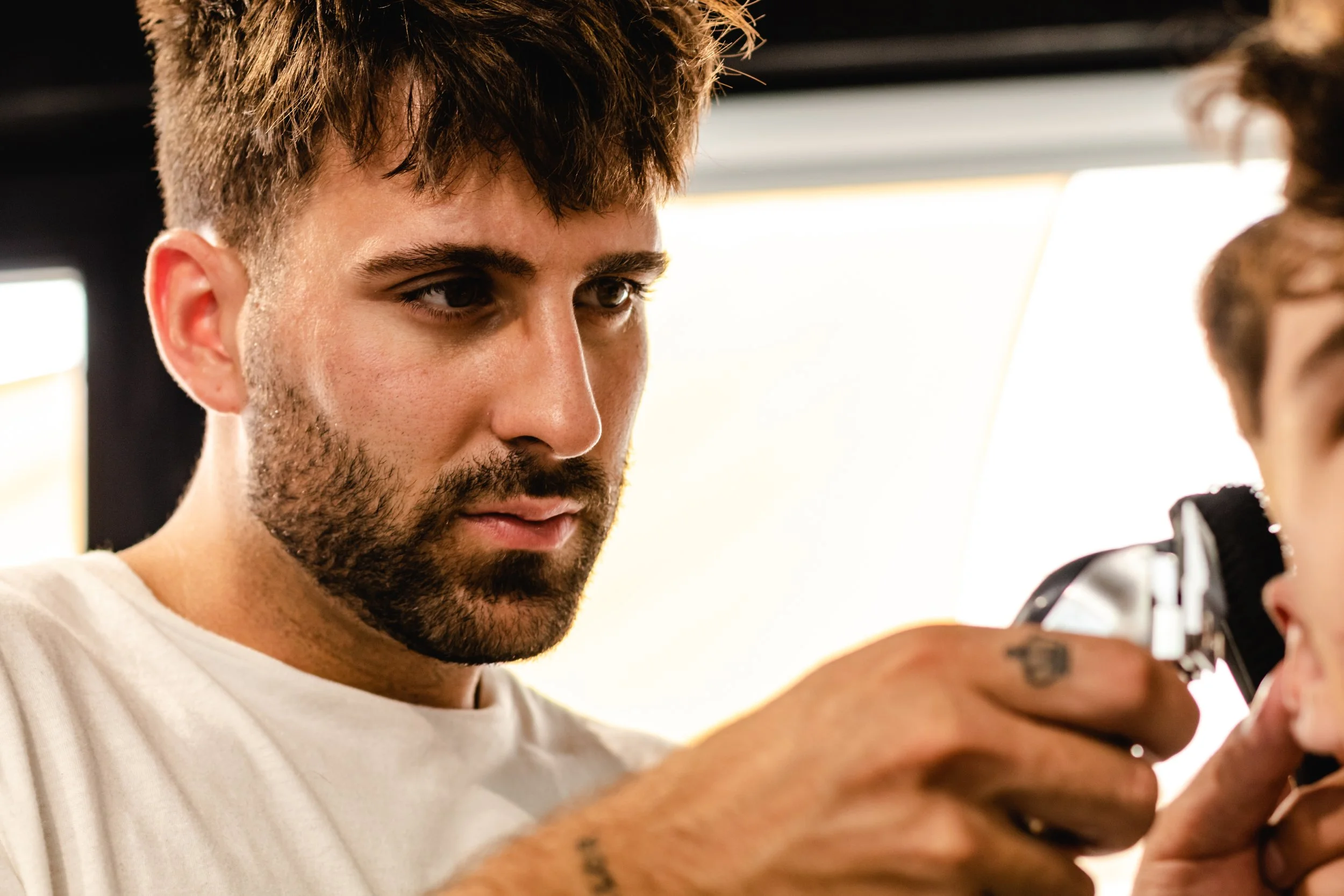
As Boystown and Lakeview's men's-only salon, Chicago Male Salon starts every fade with a consultation, not an assumption. Stylists assess face shape, hair texture, growth patterns, and how often a client realistically plans to come back before recommending a height or style. The men's-only environment means guidance is calibrated specifically for male hair and grooming goals, with no compromise. Clients regularly leave with a different fade than they originally intended — and prefer it. Chicago Male Salon has served Boystown and Lakeview for over 20 years. With 50 or more combined years of experience across the team, that recommendation is grounded in what actually works, not just what looks good in a reference photo.
Conclusion
The right fade is never a one-size answer. Types of fade haircuts for men range from subtle to dramatic — temple and shadow fades for low-maintenance impact, low and mid fades for everyday versatility, and high and skin fades for maximum contrast with maximum upkeep commitment. Face shape, hair texture, lifestyle, and maintenance frequency all factor into the decision. A stylist consultation turns that full taxonomy into a single personalized recommendation. At Chicago Male Salon, that consultation is the starting point of every haircut appointment — because knowing the options is only useful when someone who understands your hair applies them.
Frequently Asked Questions
What is the difference between a fade and a taper?
A taper gradually shortens hair as it moves toward the ear and neckline but always leaves some hair behind — the skin is never exposed. A fade takes that transition further, often down to bare skin, with a seamless gradient produced by progressive clipper guard changes. The visible difference is most evident at the sideburn and neckline: a taper reads as subtle and traditional, a fade reads as defined and high-contrast. Both are blended techniques, but a fade produces a sharper finish. A skilled stylist can blend both approaches for clients who want something between the two extremes.
Which type of fade is best for a round face?
A high or mid fade paired with volume on top is the most flattering combination for a round face. The tighter sides create a visual narrowing effect, while the lifted top adds vertical contrast, lengthening the face proportionally. Avoid low fades with flat tops on a round face — that combination emphasizes width rather than counterbalancing it. A quiff or textured crop on top, paired with a mid or high fade, is the most recommended combination for barbers working with round or fuller facial structures. A stylist can assess whether your specific bone structure leans toward one height over the other.
How often do you need to get a fade touched up?
Frequency depends entirely on the fade height and how clean you want it to look. Skin and high fades show growth within one to two weeks and look noticeably overgrown by week three. Mid fades hold their shape for two to three weeks before the blend line softens. Low and shadow fades can stretch to three to four weeks without looking unkempt. Most stylists recommend treating touch-up visits as a fixed part of your grooming routine rather than something to delay — consistency keeps the cut looking intentional rather than just growing out between visits.
Can a fade work with curly or textured hair?
Fades work exceptionally well with curly and textured hair. The contrast between clean, close sides and natural volume on top is one of the most striking combinations in modern men's grooming. A mid or high fade paired with a curly or afro-textured top is a popular choice specifically because it showcases natural texture rather than fighting it — the fade defines the shape while the top does the expressive work. The key factor is a stylist experienced with textured hair who can achieve a seamless blend without creating harsh lines or uneven transitions at the gradient point.
What is a skin fade versus a zero fade?
A skin fade uses clippers to pass directly over the scalp, removing all hair down to the bare skin at the taper line. A zero fade uses clippers without a guard, which cuts extremely close but leaves a faint, almost imperceptible layer of stubble — the scalp is not fully exposed. Both are bold and modern, but the skin fade is the sharper, higher-maintenance option that requires more frequent visits and scalp care. If you want the most dramatic contrast available and can commit to touching it up every one to two weeks, the skin fade delivers it. For slightly less upkeep with nearly the same visual effect, the zero fade is the practical alternative.
What should I say to my barber or stylist when asking for a fade?
Be specific rather than vague. Say "low fade" or "mid skin fade" rather than just "fade." Bring reference photos from the front and the back so your stylist can see both the height and the shape you're after. State how much length you want on top and how often you plan to come back, since maintenance frequency affects which height your stylist will recommend. Mention your hair texture, growth direction, and any sensitive areas if you're considering going to skin. The more context you give upfront, the more precisely your stylist can translate the reference into what actually works on your head.