
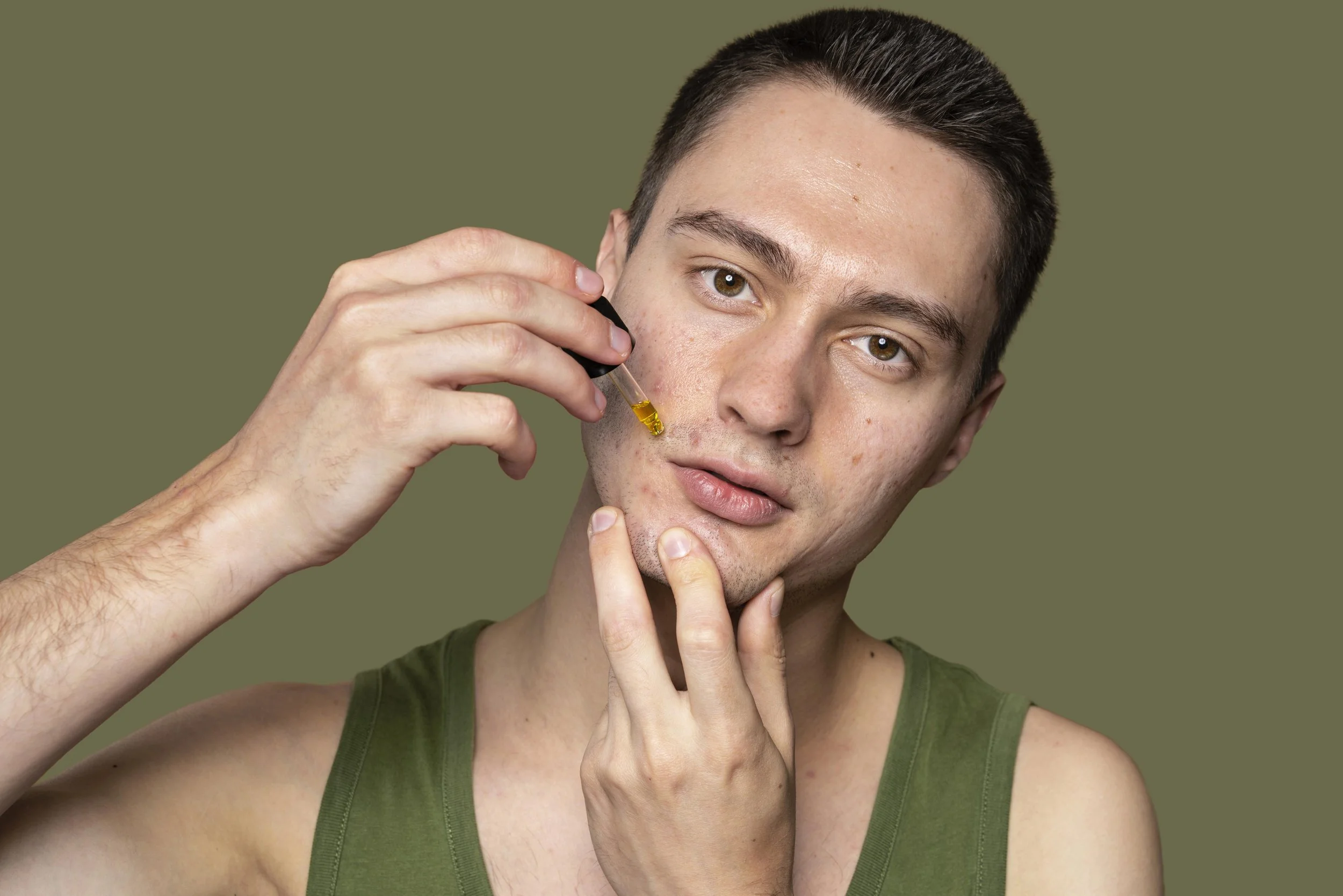
A facial for men with acne does more than clean the surface. Adult male acne is driven by testosterone-linked oil production, daily shaving irritation, and thicker skin that traps debris more deeply. Professional treatments designed for acne-prone male skin go beyond the standard spa facial. This guide covers the types that actually work, what to expect, and how often to go.
Why Men’s Skin Is More Acne-Prone Than You Think
Testosterone drives sebum production at a rate significantly higher than in women, which means men’s pores clog faster and more persistently. Men’s skin is also 20 to 25 percent thicker on average, trapping dead cells and bacteria at a deeper level. Daily shaving removes the protective skin barrier, creating micro-inflammation pathways where acne bacteria enter. These combined factors explain why over 40 percent of men in their 20s deal with adult acne, and why male-specific treatment approaches produce better outcomes.
The Role of Shaving in Adult Male Acne
Shaving is one of the most overlooked contributors to male acne. Razor drag creates micro-tears where acne-causing bacteria enter the skin. Ingrown hairs, common in men who shave closely or against the grain, mimic acne lesions and are often mistaken for breakouts. Men with beards trap oil and dead skin cells against the face, creating a different congestion pattern. A professional acne facial begins with a skin analysis that accounts for shaving habits and beard zones, adjusting technique accordingly.
Deep Cleansing Facials — The Acne Baseline Treatment
A deep cleansing facial is the standard entry point for acne-prone male skin. The treatment opens with steam to soften clogged pores, followed by professional extractions of blackheads and whiteheads that cannot be safely replicated at home. Exfoliation removes dead cell buildup, and a calming mask reduces post-extraction redness. This sequence suits mild to moderate acne and works best on oily or combination skin. Sessions every 4 to 6 weeks produce compounding results as congestion is cleared before it deepens.
Chemical Peels for Acne — When You Need More Than a Cleanse
When a deep cleanse is not enough, a chemical peel offers a step up. Alpha hydroxy and beta hydroxy acids dissolve the bonds holding dead skin cells to the surface. Salicylic acid, a BHA, penetrates oil-filled pores directly, making it particularly effective for men with active acne. PCA Skin peels provide clinical-grade exfoliation with results that include reduced blackheads, tighter pores, and fewer active lesions. A trained esthetician assesses tolerance before selecting peel depth, since men with active breakouts require a measured approach.
LED Light Therapy — The Inflammation Fighter
Blue LED light at 415 to 445 nanometer wavelengths targets and destroys Propionibacterium acnes, the bacteria responsible for inflammatory acne lesions. Sessions are painless, require no downtime, and are safe for all skin types including post-shave sensitivity. LED therapy is often combined with a deep cleanse or chemical peel for multi-mechanism acne control, addressing bacterial activity and surface congestion simultaneously. It is not effective as a standalone option for purely comedonal acne involving only blackheads and whiteheads, which require physical or chemical extraction.
Microdermabrasion — Smoothing Post-Acne Texture and Scarring
For men who have brought active breakouts under control but are left with uneven texture or shallow scarring, microdermabrasion addresses the surface damage acne leaves behind. Mechanical exfoliation removes the outermost skin layer, smoothing texture and stimulating collagen production to soften shallow scars over time. It suits most skin types and can be paired with a chemical peel for deeper results. Chicago Male Salon offers microdermabrasion as a dedicated service for men managing post-acne concerns.
The Custom Acne Facial — When One Treatment Type Isn’t Enough
Most men’s acne is not one-dimensional. Active breakouts, post-acne scarring, oily zones, and shaving-aggravated inflammation often appear simultaneously in different areas. A custom acne facial combines techniques including extractions, chemical exfoliation, and calming actives in a single session tailored to what the skin presents that day. There is no fixed formula; the esthetician assesses and adjusts throughout. This approach works particularly well for men who have tried single-treatment options without consistent results and need a more responsive protocol.
Acne Facial Treatments at Chicago Male Salon

Chicago Male Salon’s estheticians work exclusively with men, meaning every acne facial accounts for shaving history, beard zones, and male skin physiology from the first consultation. The dedicated Acne Facial Treatment uses professional-grade products including PCA Skin and IMAGE Skincare formulations. Microdermabrasion and custom rejuvenation facials are also available for men managing post-acne texture or combination concerns. Located at 3418 N Halsted in Boystown, the salon has served Chicago men for over 15 years, with 231 Yelp reviews and licensed estheticians on staff.
How Often Should Men with Acne Get Professional Facials?
The skin completes a natural cell turnover cycle approximately every 28 days. Professional estheticians typically recommend a facial every 4 to 6 weeks for acne-prone skin to stay ahead of congestion before it deepens. Men in an active breakout phase often benefit from sessions every 3 to 4 weeks initially, then spacing out as the skin stabilizes. Consistency matters more than intensity. A single acne facial produces limited lasting results; the compounding effect of regular treatment is what generates sustained improvement over time.
What to Expect at Your First Men’s Acne Facial
A professional men’s acne facial begins with a skin consultation covering breakout type, shaving habits, and sensitivity. The esthetician cleanses to remove surface oils, then applies steam to soften congested pores for safer extractions. Manual extractions remove blackheads and trapped debris. A treatment mask formulated for acne-prone skin is applied and removed, followed by a calming finish. Aftercare guidance covers product use and shaving timing. First-time clients often find the process gentler than expected, with no significant downtime required afterward.
At-Home Acne Care Between Professional Facials
Maintain results between professional facials with a twice-daily cleanse using a salicylic acid face wash to keep pores clear. Use a non-comedogenic moisturizer to keep skin balanced; stripping all surface oil triggers increased sebum production. Benzoyl peroxide spot treatments address active lesions between sessions without disrupting the full-face routine. Avoid touching the face for 24 hours after a professional facial. Do not resume aggressive shaving for at least 48 hours post-treatment, giving freshly treated skin time to recover its protective barrier.
Conclusion: Finding the Right Facial for Men with Acne
The best facial for men with acne depends on acne type, severity, and where the skin is in the treatment journey. Deep cleansing facials address active congestion. Chemical peels target persistent breakouts and post-acne texture. Custom acne treatments combine techniques for men with complex or multi-zone concerns. A licensed esthetician who understands male skin produces more consistent results than any at-home routine. Frequency and consistency over time matter more than any individual session, regardless of which treatment is chosen.
Frequently Asked Questions
Does a facial actually help with male acne?
Professional facials help with mild to moderate acne by physically removing clogged material through extractions, chemically exfoliating dead skin with acid-based treatments, and reducing surface bacteria through antimicrobial masks or LED therapy. They are most effective when used consistently as part of an ongoing skin maintenance plan rather than as a one-time fix. For severe or cystic acne, professional facial treatment works best as a complement to a dermatologist’s prescribed protocol rather than a standalone solution.
What type of facial is best for acne-prone oily skin in men?
For oily, acne-prone skin in men, a deep cleansing facial is typically the most appropriate starting point. It combines steam, professional extractions, and targeted exfoliation to manage congestion directly. Men with persistent oiliness alongside active breakouts often benefit from adding a salicylic acid chemical peel, which penetrates oil-filled pores more effectively than surface exfoliation alone. A consultation with a licensed esthetician confirms the right approach based on current skin condition, breakout pattern, and how the skin has responded to previous treatments.
How often should men with acne get a professional facial?
Men with acne-prone skin generally benefit from professional facials every 4 to 6 weeks, aligned with the skin’s natural cell turnover cycle of approximately 28 days. During active breakout phases, a cadence closer to every 3 to 4 weeks is appropriate. Once acne is under control, monthly maintenance prevents congestion from rebuilding. The specific frequency depends on acne severity, skin type, and how the skin responds between sessions. A licensed esthetician should reassess the recommended cadence at each visit as skin condition evolves.
Can men with a beard get an acne facial?
Men with beards can and should receive professional acne facials. Beard hair does not prevent treatment; a skilled esthetician adjusts technique to work around facial hair, focusing extractions on accessible skin and adapting product application to avoid buildup in beard zones. Beard acne, often mistaken for folliculitis or ingrown hairs, responds well to deep cleansing and targeted antibacterial treatments. Informing your esthetician about shaving habits and beard maintenance at the start of consultation ensures the treatment is tailored to your specific pattern.
What is the difference between a chemical peel and an acne facial?
An acne facial is a multi-step treatment that includes cleansing, steam, extractions, and a treatment mask, addressing active congestion through physical and topical means. A chemical peel uses acid formulations to exfoliate the skin chemically, targeting dead cell buildup, clogged pores, and post-acne texture at a deeper level. Chemical peels are typically a step up from regular acne facials and better suited for men dealing with persistent breakouts, recurring congestion, or post-acne discoloration that surface-level treatment has not resolved.
How do I take care of my skin after a men’s acne facial?
After a professional acne facial, avoid touching your face for at least 24 hours. Skip shaving for 24 to 48 hours to allow treated skin to recover; shaving immediately after extractions increases irritation and infection risk. Use only gentle, non-comedogenic cleanser and moisturizer for the first 48 hours. Avoid direct sun exposure and skip high-intensity workouts the same day, as heat and sweat can aggravate freshly treated pores. Your esthetician will provide specific product guidance based on the treatment received and your skin type.