

Understanding the Chemical Peel Healing Process
Day-by-Day Recovery Timeline and Aftercare Tips
If you’ve just had a peel — or you’re researching before booking — understanding the recovery process is critical. The redness, tightness, and peeling you see afterward are not accidents. They are part of a controlled process designed to trigger smoother, healthier skin.
At Chicago Male Salon, we walk every client through recovery in detail. This guide explains the full chemical peel day-by-day process so you know exactly what’s normal, what’s not, and how to heal properly.
Chemical Peel Recovery — What’s Normal and What to Expect
After a peel, your skin enters a structured healing phase, with common side effects such as redness, warmth, tightness, dryness, flaking, visible peeling, and temporary sensitivity. These are normal signs that the treatment is working as the outer layer sheds to reveal fresh skin. Light peels involve minimal peeling and a shorter recovery, while medium peels create more noticeable peeling and a longer healing time, all within a controlled, predictable process.
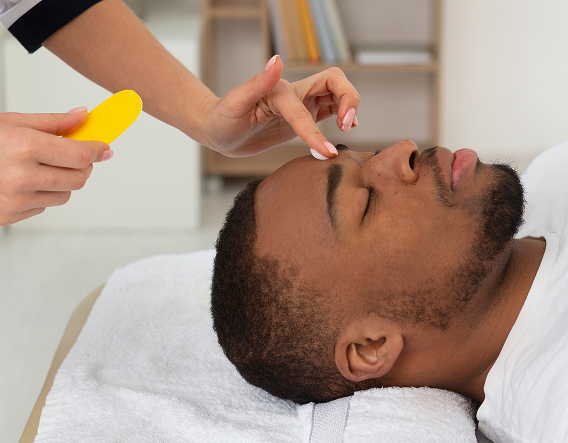

What to Do After a Chemical Peel — Essential Aftercare for Men
If you’re wondering what to do after a chemical peel, keep your routine simple, gentle, and protective. Cleanse with lukewarm water using only your fingertips—avoid scrubs, brushes, or washcloths that can irritate healing skin. Moisturize frequently with a barrier-repair formula containing hyaluronic acid or ceramides to reduce tightness and support recovery. Daily broad-spectrum SPF 30+ is mandatory, with zinc oxide or titanium dioxide ideal for sensitive skin. For 7–10 days, stick to a minimal routine: gentle cleanser, moisturizer, and sunscreen only. Do not pick or peel flaking skin, as this increases the risk of scarring and hyperpigmentation. This is essential for proper after-chemical peel care.
Products to Avoid During Chemical Peel Recovery
During recovery, your skin barrier is compromised, making it more vulnerable to irritation. Avoid retinoids like retinol, tretinoin, and adapalene, as well as AHAs and BHAs, including glycolic, lactic, and salicylic acid. Skip benzoyl peroxide, vitamin C, until peeling stops, physical exfoliants, alcohol-based aftershave, and fragranced products.
Chemical Peel Downtime — Light vs. Medium Peels
Understanding the downtime from a chemical peel helps you plan around work and social commitments. Light peels typically cause mild, visible effects for 0–3 days, and most men return to work the same day. Medium peels involve 5–10 days of peeling, most noticeable around days 4–7. Even “no downtime” treatments require strict aftercare and sun protection.
When to Resume Activities — Exercise, Shaving, Swimming & Other Treatments
Understanding when to safely return to your normal routine is a key part of chemical peel aftercare for men. Because your skin barrier is temporarily compromised after a peel, timing matters to avoid irritation, infection, or delayed healing.
Exercise and Sweating
Avoid strenuous workouts for at least 48–72 hours after your chemical peel. Sweating increases heat and moisture on the skin, which can irritate the treated area and interfere with proper healing. In some cases, excessive sweating can lead to blistering or premature peeling. Light activity like walking is generally fine, but avoid heavy lifting, running, hot yoga, or outdoor workouts until your skin has stabilized. Avoid strenuous workouts for at least 48–72 hours after your chemical peel. Sweating increases heat and moisture on the skin, which can irritate the treated area and interfere with proper healing. In some cases, excessive sweating can lead to blistering or premature peeling. Light activity like walking is generally fine, but avoid heavy lifting, running, hot yoga, or outdoor workouts until your skin has stabilized.
Shaving After a Chemical Peel
One of the most common questions in chemical peel aftercare is: When can I shave?
You should wait 5–7 days before shaving the treated area. Shaving too soon can cause micro-cuts, irritation, and disrupt healing skin. When you resume shaving:
- Use a clean, sharp razor
- Choose a gentle, fragrance-free shaving cream
- Avoid alcohol-based aftershaves
Electric razors may be a safer option for the first shave post-treatment
Swimming, Saunas, and Heat Exposure
Avoid pools, hot tubs, saunas, and steam rooms until all visible peeling has stopped. Chlorine, bacteria, and heat can irritate sensitive skin and increase the risk of infection. This is especially important during the peak period of chemical peel downtime.
Sun Exposure and Protection
Sun protection is critical after a peel. Avoid direct sun exposure for at least 2 weeks, as your skin is more vulnerable to UV damage. Apply a broad-spectrum SPF 30+ daily, ideally with zinc oxide or titanium dioxide. Reapply every 2 hours when outdoors, and wear protective clothing such as hats and sunglasses.
Other Treatments and Procedures
Avoid additional treatments such as Botox, fillers, waxing, facials, or laser procedures for at least 2 weeks after your peel. Your skin needs time to fully recover before undergoing further treatments.
Makeup Use
For light peels, you may apply light mineral makeup after 24 hours. For medium-depth peels, wait until peeling has fully stopped before applying makeup to avoid irritation.
Following these guidelines ensures optimal post-chemical peel care and helps you get the best results from your treatment.
Recovery Support at Chicago Male Salon
Every peel at Chicago Male Salon includes personalized aftercare guidance tailored to your treatment and lifestyle. We address shaving, workouts, products, and healing timelines using PCA Skin professional formulas. We provide ongoing support so your recovery feels confident.
Pricing and Booking
Every peel recovery plan includes detailed after-chemical peel care instructions tailored to your treatment depth and skin type. We provide transparent pricing, personalized recommendations, and ongoing support throughout your peel recovery process. Book your consultation at Chicago Male Salon today and recover with confidence.
Address & Hours
Join the Journey
We’re Minutes From Lincoln Park — Address & Hours
Our location in Lakeview/Boystown makes it quick and simple to reach from Lincoln Park and nearby neighborhoods. Whether you're coming from home, work, or the gym, we’re easy to access.
JOIN USAddress
You can find us 3418 N Halsted Street, Chicago, IL
Hours
Mon–Fri: 12pm – 9pm
Sat: 10am – 7pm
Sun: 12pm – 8pm
Contact
Call or Text:
773-281-6005
We’re happy to answer your questions!
FAQs
-
Avoid strenuous exercise for at least 48–72 hours after your peel. Sweating can irritate the compromised skin barrier and, in some cases, cause blistering or premature lifting of the peeling skin. Light walking is generally fine, but skip hot yoga, heavy lifting, and outdoor cardio until your peeling has subsided. Heat and increased blood flow can worsen redness and sensitivity during early healing. Once the flaking stops and your skin feels comfortable again, you can gradually return to your normal fitness routine without risking irritation or delayed recovery.
-
You should avoid direct sun exposure for at least 2 weeks after your chemical peel. During this time, your newly revealed skin is more sensitive and highly vulnerable to UV damage. Exposure to sunlight too soon can lead to hyperpigmentation, irritation, or even long-term discoloration. Always apply a broad-spectrum SPF 30 or higher daily, even if you’re indoors or it’s cloudy outside. Mineral sunscreens with zinc oxide or titanium dioxide are best for sensitive, healing skin. For added protection, wear a wide-brimmed hat and limit time outdoors during peak sun hours.
-
Yes, it is completely normal for your skin not to visibly peel after a chemical peel, especially if you received a lighter PCA Skin treatment. Many men expect dramatic flaking, but not all peels produce visible peeling. Even without noticeable shedding, your skin is still undergoing cellular turnover beneath the surface. This process helps improve tone, texture, and clarity over time. The effectiveness of the treatment is not determined by how much your skin peels, but by the overall improvement in your skin in the following days and weeks.
-
The timing of your next peel depends on the depth of your treatment and your skin goals. For light PCA Skin peels, most men benefit from scheduling their next session every 4–6 weeks to maintain consistent results and improve skin texture. Medium-depth peels are typically spaced every 4–6 months to allow full recovery. During your visit, your provider will recommend a personalized treatment plan based on your skin condition, lifestyle, and long-term goals. Staying consistent with your chemical peel schedule is key to achieving and maintaining optimal results.
-
Most men should wait 5–7 days after a chemical peel before shaving. Shaving too soon can irritate sensitive skin, cause micro-abrasions, and interfere with the healing process. Once your skin has stopped peeling and feels comfortable, you can resume shaving using a clean, sharp razor and a gentle shaving cream. Avoid products with alcohol or strong fragrances, as they can cause stinging or dryness. If your skin is still sensitive, consider using an electric razor for your first shave to reduce friction and irritation.